TL;DR
- ·A pest control missed call is any call to your business line that doesn't reach someone who can book the job: unanswered, sent to voicemail, abandoned on hold or made after hours.
- ·Count them before you fix them: 30 days of your phone provider's call log tells you how many you miss, when you miss them and roughly what they're worth.
- ·Lani AI answers every call in under a second, 24/7, texts missed callers back within seconds and books straight to your scheduler. 7-day pilot, completely free. If you decide to move forward, there's a setup.
What counts as a missed call in pest control?
A missed call is any call to your business line that ends without the caller reaching someone who can help them book: rings out, goes to voicemail, hangs up on hold, or comes in after hours. Pest control missed calls are easy to undercount because the phone system only shows some of them as missed. A caller who sat on hold for 2 minutes and gave up often looks like an answered call in the log.
The callers you lose this way are rarely the ones you'd choose to lose. Existing customers usually call back, because they already have your number saved and a visit on the calendar. New customers with mice in the kitchen or wasps by the front door usually don't. They go back to the search results and call the next company on the list, and whoever picks up first tends to get the job.
The trap is counting only voicemails. Plenty of people won't leave one, so a short voicemail list can hide a long list of hang-ups. Count every call that didn't end with a person or a booking, not just the ones that left a message.
Checklist
Count it as a missed call if it...
- Rang out with no answer
- Went to voicemail, message or not
- Hung up while on hold
- Lasted under about 10 seconds
- Came in after hours
- Reached someone who couldn't book it
Why do pest control companies miss so many calls?
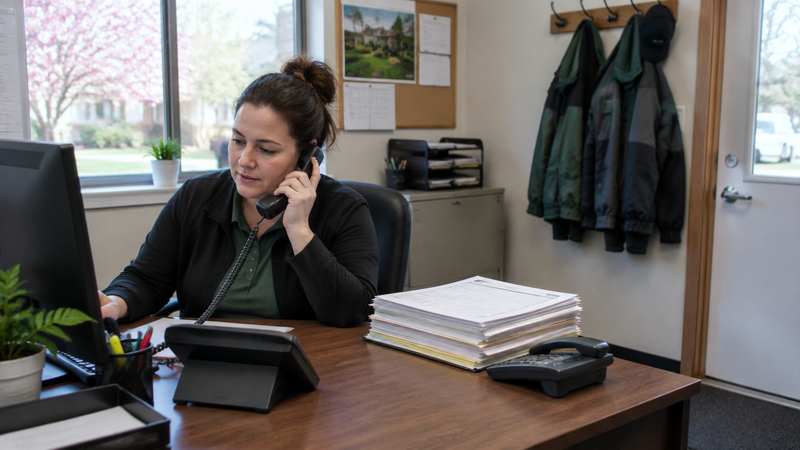
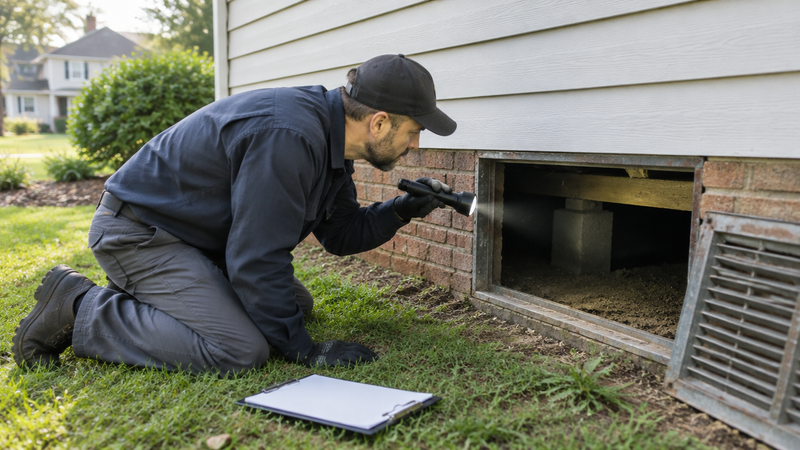
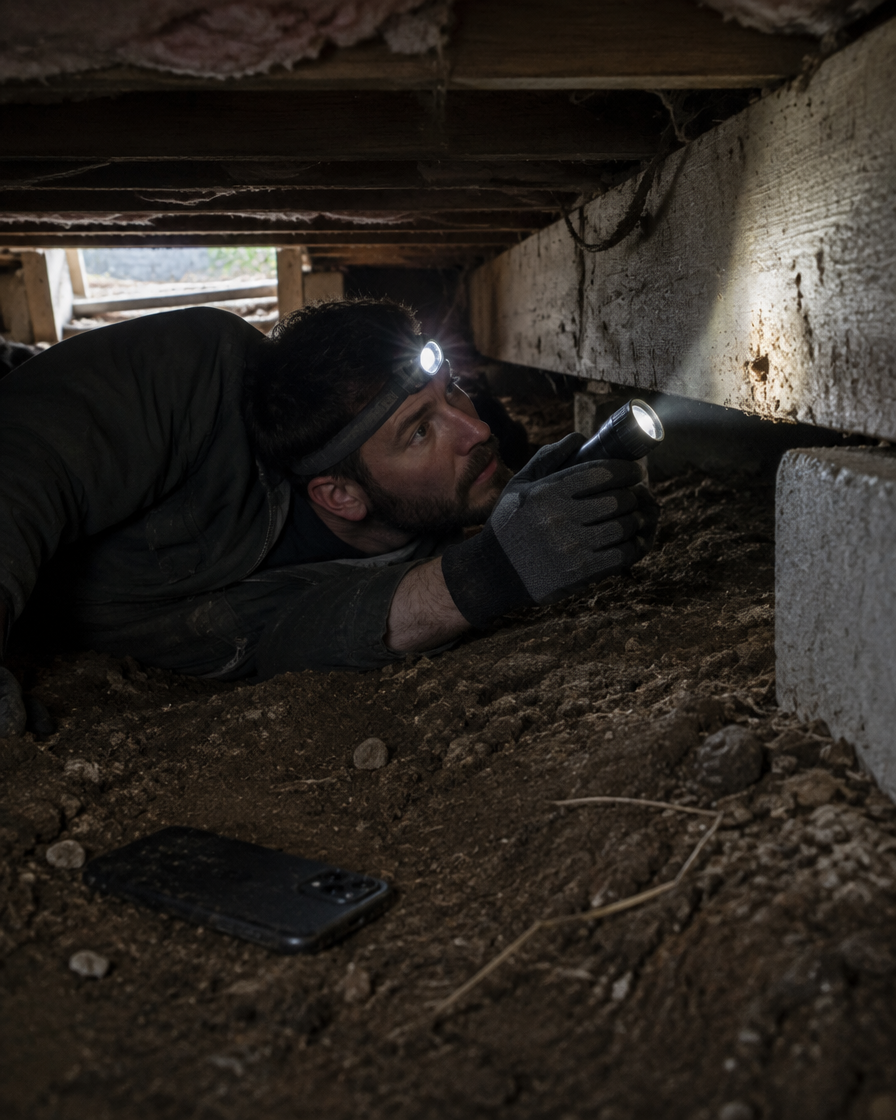
Because the calls arrive when everyone is busy: techs are on routes, the office is 1 or 2 people, and demand comes in waves rather than evenly through the week. Nobody is ignoring the phone. A tech in a crawl space can't answer, and an office manager on a call with 1 customer can't answer the second line at the same time.
The pattern is predictable once you look for it. Mornings get crowded with route changes and reschedules. Lunch and the end of the day are thin. Then there's the season: termite swarm calls when spring warms up, stinging insect calls through summer, rodent calls when the weather turns cold. Saturdays and evenings matter too, because that's when homeowners are home to notice the problem. If you work in other home services, the same shape shows up for pool builders, and we covered that in our guide to the AI receptionist for pool builders.
The trap is trying to staff for the peak. Hiring 1 more person for the 6 busiest weeks of the year rarely works, because the spike shows up on a Tuesday afternoon and a Saturday evening, not neatly inside office hours.
Other trades miss calls for the same reason. The guide to an AI phone agent for contractors shows how it looks when the owner is out on a job.
Planning for the spring and summer surge is its own job. Our guide to pest control busy season calls covers how to see it coming and which calls to answer first.
How do you find out how many calls you're missing?
Pull the last 30 days of call history from your phone provider and count every inbound call that was unanswered, went to voicemail or lasted under about 10 seconds. Most business phone systems and VoIP providers can export this as a spreadsheet. Sort it by hour and day of the week, and the gaps usually jump out within a few minutes.
Step by step
Your missed-call count, in 5 steps
- 1
Export the log
30 days of inbound calls from your phone provider, from your busiest recent month.
- 2
Flag the misses
Unanswered, voicemail, and anything under about 10 seconds.
- 3
Sort by hour & weekday
The gaps usually show up within a few minutes.
- 4
Match against your customer list
Split the misses into new callers and existing customers.
- 5
Check what happened next
Who got a callback, how long it took and who booked. That's your baseline.
Then do 2 more checks. First, match the missed numbers against your customer list, so you know how many were new callers and how many were existing customers. Second, look at what happened next: did anyone call them back, how long did it take, and did any of them book? That's your real missed-call rate, and it's the number to measure any fix against.
The trap is checking a quiet month. If you pull January and you're a spring-heavy business, the numbers will look fine. Use your busiest recent month, or pull 2 months and compare them.
What does a missed pest control call cost?
More than the first treatment, because many new pest control customers go on to a recurring plan, and you can estimate it with your own figures. Here's an illustration with made-up numbers, not a result Lani AI has measured. Say you get 120 inbound calls a month and 15% go unanswered, so 18 missed calls. Say 1 in 3 of those is a new customer, so 6, and you'd have booked half of them, so 3 new customers a month. If a new customer is worth $500 in the first year between the initial treatment and a quarterly plan, that's about $18,000 of first-year revenue a year (120 x 15% x 1/3 x 1/2 x $500 x 12).
18
missed calls a month
1 in 3
new customers
1 in 2
would have booked
$500
first-year value
= first-year revenue a year
$18,000
An illustration using this section's example figures (120 calls a month, 15% unanswered), not a result Lani AI has measured. Put your own call log into the ROI calculator.
Treat that as revenue, not profit, and assume some of those callers would have tried you again. Halve it and it's still worth checking against your own numbers. The estimate also leaves out the long tail: a customer who stays on a plan for 4 or 5 years is worth several times the first-year figure, and that's the customer your competitor keeps when you miss the call. Put your real numbers into the ROI calculator, and see our post on AI receptionist ROI for the general version of this arithmetic.
The trap is trusting a ready-made figure, from us or anyone else. Your call volume, your close rate and your plan pricing decide the answer, so use them.
What are the options for fixing pest control missed calls?
There are 5 common fixes, from cheapest to most complete: a better voicemail greeting, forwarding calls to techs' cell phones, a missed call text back, a human answering service, and an AI receptionist. Each one catches more callers than the last, and each one has a cost beyond the price.
A better voicemail greeting costs nothing but still relies on callers who'll wait for a callback, and new callers often won't. Forwarding to techs puts the phone in the hands of someone on a ladder or mid-treatment, which is slow and not always safe. A missed call text back is the minimum worth having: it reaches the caller in seconds, but a text isn't a booked visit. A human answering service takes a message, which helps after hours, but someone still has to call back and book. We compared the last 2 options in AI receptionist vs answering service.
5 fixes for missed calls, compared
| Fix | Reaches the caller? | Books the visit? | The catch |
|---|---|---|---|
| Better voicemail greeting | Only if they leave a message | No | New callers often won't wait for a callback |
| Forwarding to techs' cells | Sometimes | Sometimes, later | A tech on a ladder can't answer safely |
| Missed call text back | Yes, by text within seconds | Not on its own | A text isn't a booked visit |
| Human answering service | Yes, live | Usually takes a message | Someone still has to call back and book |
| AI receptionist | Yes, every call | Yes, into your scheduler | Needs your rules, tested on your own line |
The trap is a fix that only moves the problem. If the output of your new setup is still a list of callbacks for the office to work through tomorrow, the new customer with wasps by the door has probably booked with someone else by then. Judge each option by how many callers end the call with a visit on the calendar.
1 call type is worth checking on its own: termite inspections tied to a home sale, where the caller has a deadline and won't wait for a callback. Termite inspection booking covers how those calls should go.
How does an AI receptionist stop missed calls for a pest control company?
It answers every call itself, so there's nothing to miss: the live Lani AI receptionist page says it picks up in under a second, 24/7, and books confirmed appointments into your scheduler while the caller is still on the line. That covers the second line ringing during a busy morning, the Saturday wasp call and the 9 p.m. call about scratching in the ceiling. If a call does get dropped, the live site says it texts the caller back within seconds.
Incoming call
New customer, 9 p.m.
Lani AI
Answered in under a second
New rodent job
Inspection booked into your scheduler
Matches your urgent list
Transferred to the on-call tech with the details
Outside your service area
A clear no and a polite goodbye
It also handles the calls that shouldn't wait. You set the rules for urgent jobs, and the live site says it transfers calls that need a person to your staff with the full context, so the on-call tech hears what the caller already said. It logs every call and its outcome to your CRM, which means your missed-call count from the call log can be checked against real bookings. For a step-by-step walkthrough of a typical call, read our post on the AI answering service for pest control, and if your customers call in Spanish or another language, it answers in 30+ languages.
The trap is switching it on without rules. Tell it what it mustn't answer on its own: chemical safety, re-service under your guarantee and prices for a job nobody has inspected. Those go to a person. Test that it hands them off instead of guessing.
How do you test whether it fixes your missed calls before you buy?
Measure your missed calls first, run the pilot on your own line for a week, then compare the 2 numbers. Your 30-day call log is the baseline. During the pilot, count how many calls went unanswered, how many ended in a booked visit and how many reached a person when they should have.
Before real customers call, test it yourself 5 ways: as a new homeowner with mice who wants someone this week, as a caller with a wasp nest on a Saturday evening, as an existing customer moving a quarterly visit, as a real estate agent who needs a termite inspection before a closing date, and as an unhappy customer whose treatment didn't work. Check that each record has the right details, each booking lands where your routes can handle it, and the unhappy customer reaches a person. Our guide to after-hours answering with AI covers the overnight setup if that's where most of your missed calls are.
Checklist
Your pilot week scorecard
- Missed calls this week vs your 30-day baseline
- Calls that ended in a booked visit
- Calls that reached a person when they should have
- Bookings that fit your routes without a reshuffle
- Records with the right details for the tech
- The unhappy-customer test call reached a person
That's the case for a pilot instead of a demo. The 7-day pilot is completely free. If you decide to move forward, there's a setup. See how the AI receptionist works, or run your own numbers in the ROI calculator first. Pest control missed calls should show up as booked visits in the first week, not as a promise in a sales presentation.
Frequently asked questions
How do I find out how many calls my pest control company misses?
Export 30 days of call history from your phone provider and flag every call that rang out, went to voicemail, hung up on hold or lasted under about 10 seconds. Use your busiest recent month.
What does a missed pest control call cost?
Estimate it from your own numbers: missed calls x the share that are new customers x the share you'd book x a new customer's first-year value. A customer who stays on a recurring plan is worth more than that first-year figure.
Is a missed call text back enough for pest control?
It's the minimum worth having, because it reaches the caller within seconds. But a text isn't a booked visit, and a caller with wasps by the door may book whoever answers first.
How does an AI receptionist stop missed calls for pest control?
It answers every call itself, 24/7, in under a second, and books into your scheduler on the call. If a call slips through, Lani AI texts the caller back within seconds.
Ready when you are
See if Lani AI is right for your business.
7-day pilot, completely free. Live by the end of this week.