TL;DR
- ·Qualifying pool construction leads means finding out on the first call whether a homeowner's project, budget and timeline fit the work you do, before you drive out for a site visit.
- ·Budget and timeline do most of the work, but only if you ask for a range and accept "not sure yet" as an answer. Ask for a hard number up front and good prospects hang up.
- ·Lani AI answers in under a second, asks your qualifying questions and books the site visit onto your calendar. 7-day pilot, completely free. If you decide to move forward, there's a setup.
What does it mean to qualify pool construction leads?
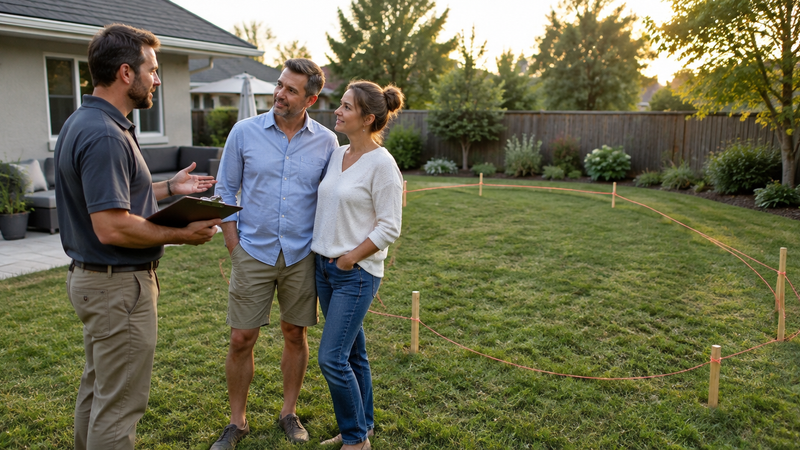
To qualify pool construction leads is to find out, early and politely, whether a caller's project is one you can build, at a price they can live with, on a timeline that fits your schedule. It's the step between "someone called about a pool" and "we're driving out to measure the yard". Done well, it means the site visits on your calendar are with homeowners who are likely to buy, and everyone else still gets a useful answer.
Pool work makes this matter more than most trades. A site visit is a real cost: the drive, an hour or more on the property, then a design and a quote that can take an evening to put together. A pool is also a slow, considered purchase, so plenty of callers are a year away from building, or haven't yet found out what a pool costs. Our guide to the AI receptionist for pool builders covers why so many of these calls land while you're on a job site. This post is about what to ask once someone, or something, picks up.
The trap is treating qualification as a filter that throws people away. A caller who isn't ready this season might be your best job next spring. The goal is to send each lead to the right next step, not to say no faster.
Which questions should you ask to qualify a pool lead?
Ask 6 things on the first call: what they want built, where the property is, who owns it and makes the decision, how soon they want to start, whether they have a budget range in mind, and how they heard about you. That's enough to decide whether a site visit is worth it, and short enough that a homeowner will answer all of it.
Each one earns its place. The project type (a new inground pool, a spa, a renovation, resurfacing) tells you whether it's work you take on at all. The address tells you whether it's in your service area, and a quick follow-up about access tells you whether equipment can reach the backyard. Ownership matters because a renter can't sign for a pool, and a homeowner whose partner hasn't seen the idea yet is a different conversation from 2 people who've already agreed. Timeline and budget are the 2 that separate a ready buyer from a browser, and the source tells you which of your marketing is sending you good calls.
The trap is adding more. Every extra question makes the call longer, and a homeowner who wanted a quick answer will hang up somewhere around question 9. Anything you need for the design, like the size of the patio or an old pool that has to come out, can wait for the site visit. When you write the questions down, put them in the order you'd ask them in a real conversation, because that's the order a receptionist, human or AI, should follow.
Template
The 6 qualifying questions, in the order you'd ask them
Swap in your own words, then hand the list to whoever answers your phone, human or AI.
1. What are you thinking of building: a new pool, a spa, a renovation or resurfacing?
2. What's the address, and can equipment get into the backyard?
3. Do you own the home, and is anyone else part of the decision?
4. When are you hoping to start?
5. Our new builds usually start around [your starting range]. Is that roughly what you had in mind, or are you still working it out?
6. How did you hear about us?
How do you ask about budget without losing the caller?
Ask for a range, not a number, and give the caller a starting point to react to. Tell them where your new builds usually start, then ask if that's roughly the range they had in mind or if they're still working it out. That gets an honest answer far more often than "What's your budget?", which makes people defensive or makes them guess low.
It works because most homeowners calling about a first pool don't know what one costs. Giving them your starting range does 2 jobs: it qualifies the lead, and it saves you a site visit with someone whose number was never going to work. "Not sure yet" is a fine answer and shouldn't end the call. Note it, and let the timeline answer decide what happens next. The Lani AI pool page says it quotes the starting ranges a builder gives it, makes clear the real number comes from the site visit, and won't invent a price.

The trap is quoting a firm price on the phone. A pool you haven't seen has too many unknowns: soil, access, drainage, permits, the finish the homeowner picks. Give a range, say what moves it, and keep the real number for the quote. If anyone answering your phone, including an AI, starts naming exact prices for a backyard nobody has measured, fix that before it costs you a job.
Why does the timeline matter as much as the budget?
Because a homeowner who wants to swim next summer and a homeowner who's "thinking about it in a couple of years" need completely different follow-up, even if their budgets match. The timeline tells you how soon to book the site visit, and if a visit is the right next step at all.
The simplest way to use it: sort callers into 3 buckets. Ready: wants to start within your next few months and has a rough range in mind, so book the site visit now. Planning: wants to build within the year, so book a visit or a design consultation without rushing it, or send your gallery and a price guide first. Browsing: no timeline yet, so add them to your follow-up list and stay in touch. Our post on pool construction lead follow-up covers what to send each group after the first call.
Ready, planning or browsing: what each caller gets
| Bucket | What you hear | Next step | Follow up |
|---|---|---|---|
| Ready | Wants to start in the next few months, has a rough range | Book the site visit on the call | Confirmation and a reminder |
| Planning | Wants to build within the year | Book a visit or a design consultation, or send your gallery and price guide | A check-in a few weeks later |
| Browsing | No timeline yet | Price guide and a place on your follow-up list | Stay in touch through the season |
The trap is ignoring your own calendar. If you're booked solid until next season, a homeowner who wants a pool in 6 weeks should hear that honestly on the first call. Saying so early protects your reputation and sometimes keeps the job, because some homeowners will happily wait for the builder who told them the truth.
Once a lead is ready for that visit, our guide to pool consultation scheduling covers how to book it so both decision-makers actually show up.
What does an unqualified site visit cost you?
More than it looks, because the cost is your time, and that's the same time you'd otherwise spend with a buyer who's ready. You can estimate it with your own numbers. Here's an illustration with made-up figures, not a result Lani AI has measured.
Say you run 5 site visits a week. Say each one takes 3 hours once you count the drive, the walk-through and the design and quote work afterwards, so 15 hours a week. Say 2 of those 5 visits turn out to be homeowners whose budget or timeline was never going to fit, which is 6 hours a week (2 x 3). Over 50 working weeks that's 300 hours a year (6 x 50), or about 7 and a half 40-hour weeks (300 / 40) spent on quotes that were never going to close.
2
visits a week that never fit
3 hours
per visit, drive and quote included
50
working weeks
= a year on quotes that won't close
300 hours
An illustration using this section's example figures, not a measured result. Put your own numbers in the ROI calculator.
Treat that as an estimate to argue with. Halve every number and it's still 150 hours a year. The point isn't to stop visiting homeowners who aren't sure. It's that a few minutes of the right questions on the first call can give you back hours you'd rather spend on the buyers who are. To weigh that against what a tool that answers and qualifies calls would cost, put your own figures into the ROI calculator, and be skeptical of anyone, including us, who quotes a ready-made number for your business.
How does an AI receptionist qualify pool leads on the call?
An AI receptionist qualifies pool leads by asking your questions in a normal conversation, writing the answers into the lead record, and booking the site visit only when the caller fits the rules you've given it. Here's a typical call. A homeowner rings on a Saturday afternoon about a new pool. It greets them with your company name, asks what they have in mind, then the address and if they own the home. It asks when they're hoping to start, mentions where your new builds usually begin and asks if that's in the range they had in mind. The caller says yes and wants to start in the spring, so it offers 2 open site visit slots and books 1 while they're still on the line.
Incoming call
Homeowner, Saturday 3 p.m.
Lani AI
Answered on the first ring
Fits your written rules
Site visit booked on your calendar
Customer in the middle of a build
Transferred to your staff with the conversation attached
Outside your service area
A polite no, without wasting the caller's time
When the answers don't fit, it shouldn't just end the call. A caller outside your service area can be told politely that you don't build there. A caller with no timeline can be offered your price guide or a callback and added to the follow-up list. A customer in the middle of a build asking about the schedule should be transferred, and the Lani AI receptionist page says it transfers calls to your staff with the full context of the conversation attached. The conversational AI assistant behind it handles callers who answer out of order, change their mind or ask a question before giving their address.
What you see afterwards is the part that saves you time. The live site says every call, outcome and booking is logged to your CRM, so the lead record should show the project type, address, timeline, budget answer and source in a few lines, with the visit already on your calendar. If you're weighing this against a human service that takes a message instead, our post on the answering service for pool builders lays out the difference. The trap is vague rules. "Only good leads" isn't a rule. "Inground builds, within 40 miles, starting within 12 months" is, and the receptionist can only qualify against what you've actually written down.
Checklist
Turn "only good leads" into rules it can follow
- The project types you build, and the ones you don't
- Your service area, as a radius or a list of towns
- How far out a start date can be and still get a site visit
- Your starting range, said as a range
- What callers who don't fit get: price guide, callback or follow-up list
- Who gets customers who are mid-build
How do you test pool lead qualification before you buy?
Call your own line as 5 different homeowners and check that each one ends up in the right place. Call as a ready buyer with a range and a spring start date. Call as someone with a budget well below your starting range. Call from an address outside your area. Call as a browser with no timeline who mostly wants to know what a pool costs. Then call as an existing customer in the middle of a build and see that you get transferred, not qualified.
After each call, check 3 things: did the lead record capture the answers correctly, did only the right callers get a site visit on your calendar, and did the callers who didn't fit still get a polite, useful answer. If some of your homeowners speak another language, try that too, since the live site says Lani AI answers in 30+ languages.

That's what a pilot is for. The 7-day pilot is completely free. If you decide to move forward, there's a setup. See how it works for builders on the pool construction page, or run your numbers in the ROI calculator first. The right way to qualify pool construction leads is the one that proves itself on your real calls in the first week, not in a sales presentation.
Frequently asked questions
How do you qualify a pool construction lead on the first call?
Ask 6 things: what they want built, where the property is, who owns it and decides, when they want to start, their rough budget range, and how they heard about you. That's enough to decide whether a site visit's worth the drive.
How do you ask a pool lead about budget without losing them?
Tell them where your new builds usually start, then ask if that's roughly what they had in mind. "Not sure yet" is a fine answer; note it and let the timeline decide the next step.
Should you give a pool price on the first call?
Give a range, not a firm price. Soil, access, drainage, permits and finishes all move the number, so the real price should come from the site visit.
What should you do with pool leads who aren't ready to build?
Give them a next step instead of a no: your gallery, a price guide, a callback or a place on your follow-up list. Pool construction lead follow-up covers what to send.
Can an AI receptionist qualify pool leads?
Yes, if you write the rules down. It asks your questions in a normal conversation, logs the answers to your CRM, and books a site visit only when the caller fits.
Ready when you are
See if Lani AI is right for your business.
7-day pilot, completely free. Live by the end of this week.