TL;DR
- ·Do AI receptionists sound human? On a routine booking or pricing call, most people never notice. The giveaway is almost never the voice quality.
- ·What breaks the illusion is lag, talking over the caller, and a rigid script that cannot absorb a change of subject.
- ·Lani AI answers in under one second in 30+ languages, starts at $997 per month, and runs a 7-day pilot that's completely free so you can judge it on your own callers.
Do AI receptionists sound human on a real call?
Do AI receptionists sound human? On an ordinary call, yes, and the honest version of that answer is that the synthetic voice stopped being the weak link a while ago. Modern voices breathe, pause, put stress on the right word, and vary their pace. Played in isolation, a good AI receptionist is very hard to distinguish from a person reading the same sentence. Where a caller starts to sense something is off is not the sound at all. It is the rhythm of the conversation.
Think about what a real front desk conversation actually involves. Someone interrupts halfway through your sentence. Somebody says wait, actually, can I ask something else first. A dog barks, a name gets spelled out, a number is repeated with a correction in the middle. A human absorbs all of that without effort. A weak AI stumbles on every one of them, and that stumble, not the voice, is what makes a caller think they are talking to a machine.
A weak AI receptionist
- 1Caller interrupts: it keeps talking
- 2Caller changes the date: it repeats the old one
- 3It asks for the caller's name a second time
- An off-script question gets "Sorry, I didn't understand"
A good AI receptionist
- 1Stops the moment the caller speaks
- 2Picks up the new date and carries on
- 3Still knows the name from the start of the call
- Answers, or hands off to a person instead of guessing
What actually makes an AI receptionist sound robotic?
Four things, and only one of them is the voice. The first is latency. A gap of two or three seconds before a reply reads as wrong instantly, because humans answer in about a fifth of a second and we are extremely tuned to that spacing. The second is turn taking. A system that talks over the caller, or that goes silent while someone is still finishing a thought, feels mechanical no matter how warm the voice is.
The third is rigidity. If the AI has one script and the caller steps off it, a weak system either repeats itself or falls back to a canned line about not understanding. The fourth is memory inside the call. If the caller gives their name at the start and the AI asks for it again three questions later, the spell breaks completely. Voice quality is the thing vendors demo, and it is the thing that matters least once you get past the first ten seconds.
The 4 giveaways & how to hear them yourself
| Giveaway | What the caller notices | How to test it |
|---|---|---|
| Latency | A pause before every reply | Time the gaps on a live call, not a recorded clip |
| Turn taking | It talks over you, or goes quiet while you're still talking | Interrupt it halfway through a sentence |
| Rigidity | It repeats itself or says it didn't understand | Change the subject, then come back to booking |
| Memory | It asks for something you already told it | Give your name first, then see if it still has it 3 questions later |
| The voice itself | Odd stress or a flat pace | Usually the least of your worries after the first 10 seconds |
Part of it is what's underneath. A chatbot that follows a script can't handle a caller who goes off it, and that's the gap our explainer on conversational AI vs a chatbot covers.
How fast does an AI receptionist have to respond to sound natural?
Under a second, end to end, including the pause it takes to decide what to say. That is the threshold where a reply lands inside the window a caller expects and stops registering as a delay. Lani AI answers in under one second, and this is worth checking yourself rather than taking anyone's word for it, because latency is the single easiest thing for a demo to hide and the hardest thing to fix later.
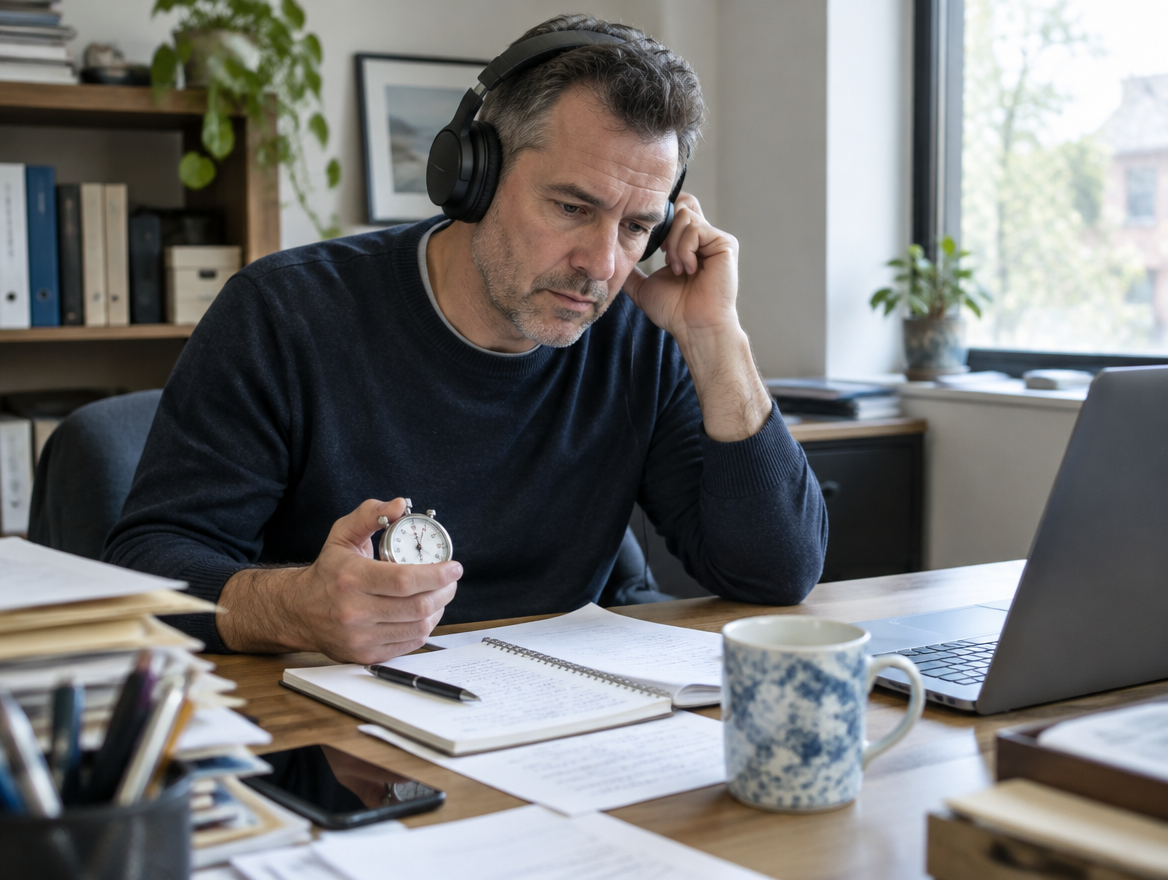
The reason it is hard is that a voice system is a chain. Speech has to be transcribed, understood, answered, and turned back into audio, and every link adds milliseconds. A vendor can show you a beautiful voice sample recorded offline and still ship something that takes three seconds to reply on a live phone line. When you evaluate a conversational AI assistant, listen to a live call rather than a clip. Time the gaps. You will hear the difference immediately.
Can an AI receptionist handle interruptions, accents & background noise?
A good one does, and this is the most useful thing to probe because it is where quality separates hardest. Interruption handling means the AI stops talking the instant the caller starts, and picks up from what they actually said rather than finishing its own sentence first. Accent handling means the system understands a caller whose speech does not match a newsreader, which describes most real customers.
Background noise is the underrated one. Real calls happen from cars, waiting rooms, job sites, and parking lots with the window down. A system tuned only for quiet rooms starts mishearing digits, and a misheard phone number costs you the callback entirely. Language matters here too. An AI voice assistant that handles 30 or more languages can meet a caller in the one they are comfortable in, and a caller speaking their own language sounds relaxed, which makes the whole exchange feel human on both sides. Our guide on Spanish speaking AI receptionists goes deeper on that.

Checklist
Real-world conditions to throw at it
- Call from a car with the window down
- Call with a TV, a dog or kids in the background
- Ask a colleague with a different accent to call
- Read out a phone number and correct 1 digit halfway
- Spell a hard last name letter by letter
- Call in another language your customers use
Should an AI receptionist tell callers it is AI?
Our position is yes, disclose it, and it costs you far less than owners expect. Callers overwhelmingly care that their problem got solved, not about the species of whoever solved it. Someone who books the appointment they wanted in ninety seconds at 8pm walks away happy. Someone who finds out later that they were misled about who they were speaking to does not, and that is a much more expensive outcome than a short line of disclosure at the start.
Incoming call
New customer, 8 p.m.
Lani AI
"I'm an AI assistant. I can book this for you now, or pass you to the team."
Happy to carry on
Books the slot and confirms it before hanging up
Wants a person
Transferred to staff with the conversation attached
Would rather call back
Gets your office hours and a polite goodbye
There is also a rules dimension worth knowing about. Several states now have disclosure requirements for automated callers, and the details differ by jurisdiction, so this is one to confirm with your own counsel rather than take from a blog post. Practically speaking, a brief natural line works better than a legalistic one. Handled well, disclosure removes the question from the caller's mind and lets them get on with the actual reason they called.
Template
Disclosure lines you can copy
Short and natural beats legalistic. Check the rules in your state with your own counsel before you pick 1.
Greeting: "Thanks for calling [Business]. I'm the team's AI assistant, and I can book you in or get you to a person."
Shorter: "You've reached [Business]'s AI receptionist. How can I help?"
If asked "Is this a real person?": "No, I'm an AI assistant. I can book this for you now, or pass you to the team."
If the caller wants a person: "Sure, I'll put you through now and pass along what you've told me."
How do you test whether an AI receptionist sounds human?
Stop listening to demos and start trying to break it. Call it and interrupt mid sentence. Change your mind halfway through booking. Say a date vaguely, like the Tuesday after next, and see whether it works out what you mean. Spell a difficult last name. Give a phone number and correct one digit in the middle. Call from a moving car. Ask something completely off topic, then steer back to booking and see whether it still remembers your name.
Then listen to the recordings with a stopwatch on the pauses, and read the transcripts. The questions that matter are whether the reply gaps stayed under a second, whether it ever talked over you, whether it recovered gracefully when you went off script, and whether it knew when to hand off to a human instead of guessing. Check that the booking actually landed correctly too, which our post on AI receptionist appointment scheduling walks through in detail.
Checklist
Score every test call
- Every reply gap stayed under 1 second
- It never talked over you
- It took the corrected digit in your phone number
- It worked out "the Tuesday after next" correctly
- It still knew your name after the off-topic question
- It handed off instead of guessing when it should have
- The booking landed on the right day in your calendar
Do this on your own line with your own callers, not in a scripted sandbox. A 7-day pilot that's completely free makes that cheap, and a week of real calls answers the do AI receptionists sound human question far better than any sample reel. While you are at it, run the numbers in the ROI calculator on what your currently unanswered calls are worth, because the honest comparison is not AI against a perfect human receptionist. It is AI against the voicemail those callers are reaching today.
Frequently asked questions
Can callers tell they're talking to an AI receptionist?
On a routine booking call, the voice is rarely what gives it away. What callers notice is lag, being talked over, and an AI that loses the thread when they change the subject.
How fast does an AI receptionist need to respond to sound natural?
Under a second, end to end, including the time it takes to decide what to say. Lani AI answers in under a second, but time it yourself on a live call rather than a recorded clip.
Should an AI receptionist tell callers it's an AI?
Yes. A short, natural line at the start costs very little, and disclosure rules for automated callers differ by state, so confirm yours with your own counsel.
How do I test whether an AI receptionist sounds human?
Try to break it on a live call: interrupt it, change your mind, correct a digit in your phone number and call from a noisy car. Then time the pauses on the recording and check that the booking landed.
Can an AI receptionist handle accents and other languages?
A good one handles everyday accents and background noise, and that's worth testing with your own callers. Lani AI answers in 30+ languages.
Ready when you are
See if Lani AI is right for your business.
7-day pilot, completely free. Live by the end of this week.