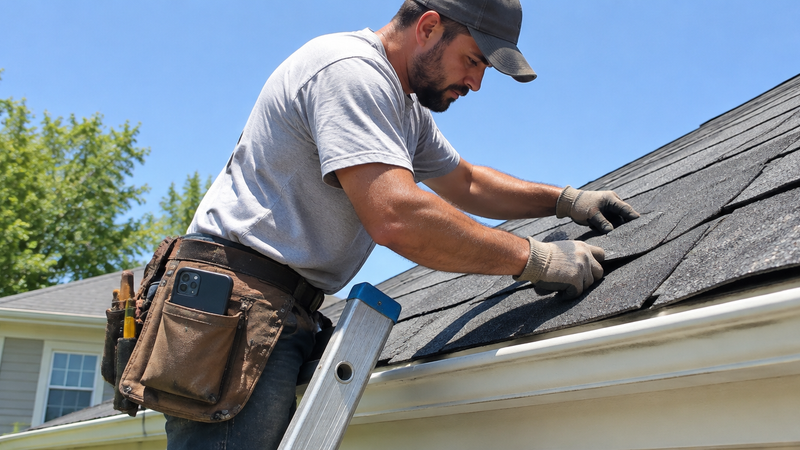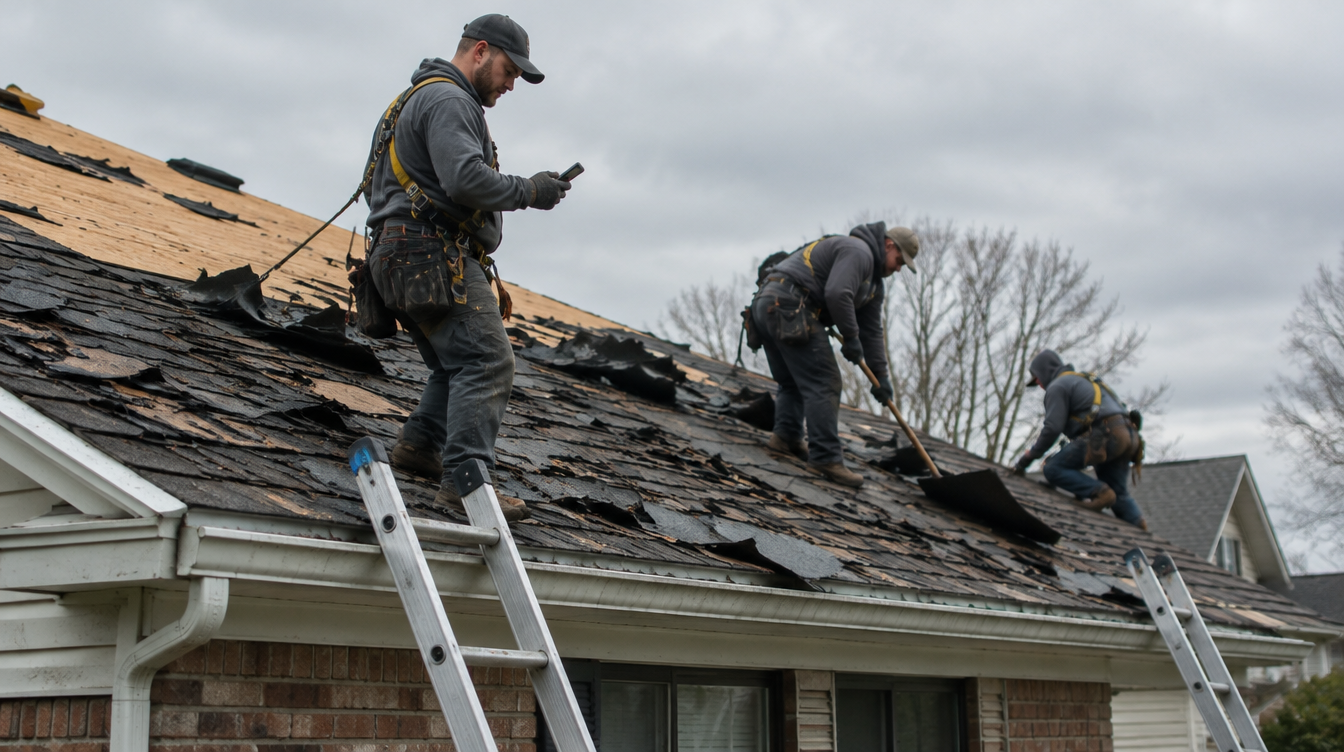
TL;DR
- ·An AI receptionist for roofing companies is software that answers your business line in a natural voice, sorts active leaks from routine requests, books roof inspections and estimates, and logs every call.
- ·The calls that matter most come in bursts after storms, when 1 office person can't answer them all. The win is answering every call at once, sending real leaks to your on-call crew and booking the rest into slots you actually have.
- ·Lani AI answers 24/7 in under a second, books into your calendar and transfers the calls you choose to your staff. 7-day pilot, completely free. If you decide to move forward, there's a setup.
What is an AI receptionist for roofing companies?
An AI receptionist for roofing companies is software that answers your business phone in a natural voice, holds a real conversation with the caller, finds out what's wrong with the roof, and books an inspection or estimate straight into your calendar. It isn't a phone tree and it isn't voicemail with a nicer greeting. A homeowner calls about shingles in the yard after a windstorm, and it asks where they live, what they're seeing, whether water is coming in and when someone can meet the inspector, then books the visit.
The category exists because roofing is a business where the people who could answer the phone are usually 30 feet up. Many roofing companies run with 1 office person or none, and the owner is often the estimator too, driving between inspections all day. The live Lani AI AI receptionist page says it answers in under a second, 24/7, books confirmed appointments into calendars like Google Calendar and Calendly, and writes each call and its outcome to your CRM, so the office starts the next morning with a list of booked inspections instead of a list of callbacks.
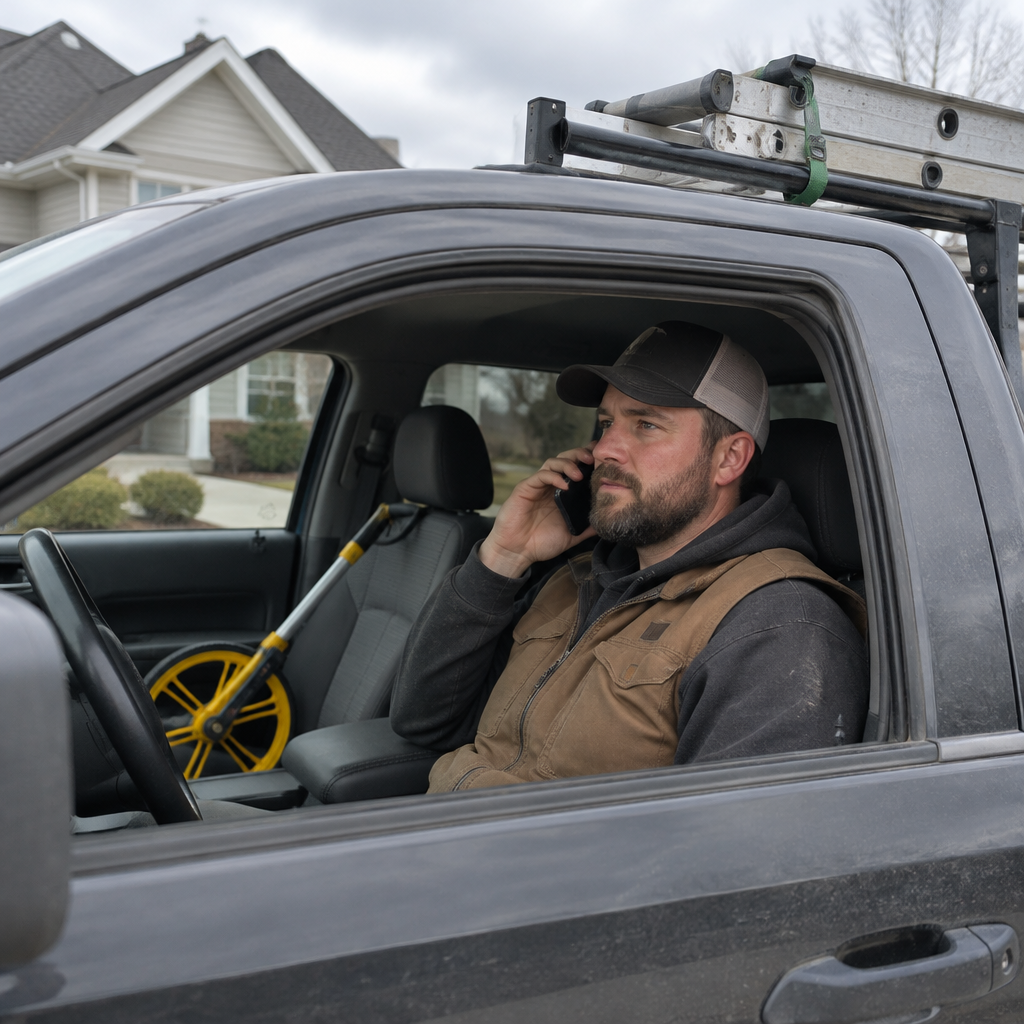
The trap is thinking of it as a general answering tool. A roofing line has its own mix of calls: active leaks, storm damage, insurance questions, commercial bids, gutter and repair jobs and existing customers asking when the crew will arrive. Set it up for that mix, not for a generic small business. For the wider picture across the trades, see our guide to the AI phone agent for contractors.
Plumbers face the same problem with water instead of weather, and our walkthrough of the AI answering service for plumbers shows how a burst-pipe call at 2 a.m. should go.
Why do roofing companies miss so many calls?
Roofing companies miss calls because the work happens away from the phone and the calls don't arrive evenly. On a normal day the phone rings while the crew is tearing off a roof and the owner is on a ladder measuring another one. On a storm day, the phone rings all at once, from every homeowner on the same few streets who just found a leak or a dent in the gutters.
Each of those callers is usually working down a list. Someone with water dripping into a bedroom isn't going to wait for a callback at 6 p.m.: they'll call the next roofer on the search results page, and the first company that answers and sounds organized tends to get the inspection. That's why the busiest days are often the days a roofing company loses the most work. The phone can only take 1 call at a time if 1 person is answering it.
1 office line
- 16 calls in the first hour
- 2The first one gets answered
- 3The rest ring out or reach voicemail
- Evening: a stack of callbacks to people who've moved on
AI receptionist
- 16 calls in the first hour
- 2Each one answered on the first ring
- 3Leaks sorted from inspection requests
- Evening: a list of booked inspections
The trap is counting only the voicemails. Plenty of callers hang up without leaving one, so the voicemail box undercounts what you missed. A missed call text back is the minimum to have in place, but a text isn't a booked inspection, and on a storm day you're competing with every other roofer in town for the same homeowners.
How should an AI receptionist handle storm surge calls?
It should answer every call as it comes in, sort the active leaks from the inspection requests, and book only into the slots your crews can actually reach. The live site says it stays on when a second line is already ringing, which is the whole point after a hailstorm: the 10th caller of the hour gets the same first-ring answer as the 1st.
Decide the sorting rules before the storm, not during it. An active leak into a living space, a tree on the roof or a section of roof that's open to the weather usually needs a crew for a tarp the same day. Missing shingles with no water inside, dented gutters and "my neighbor's getting a new roof, can you look at mine?" are inspections that can book for later in the week. Write those rules down in 3 to 5 plain lines, along with who's on call and how they're reached, so every caller gets the same answer.
Incoming calls
- All sorted
Same-day crew for a tarp
- Water coming into a bedroom
- Tree on the roof
- Section open to the weather
Inspection later this week
- Missing shingles, nothing inside
- Dented gutters
- "My neighbor's getting a new roof"
The trap is booking more inspections than your estimators can do. If you only have 2 people running inspections, decide how many slots a day they can really handle, and tell callers honestly when the next one is. A firm slot on Thursday is better than a vague "someone will call you" today. Storm calls don't stop at 5 p.m. either, and our guide to after-hours answering with AI covers how to handle the overnight ones.
Template
Your storm-day rules, in 5 lines
Edit these to match your crews, then hand them to whoever sets up your line.
1. Active leak into a living space, a tree on the roof or a section open to the weather: transfer to the on-call crew.
2. Missing shingles or dented gutters with no water inside: book an inspection in the next open slot.
3. Inspections per estimator per day: [your number], and no more.
4. Next slot is days away: say so and book it. Never promise a call today you can't make.
5. On-call crew doesn't answer: tell the caller when they'll hear back, and log the call.
Can an AI receptionist book roof inspections & qualify leads?
Yes, and for roofers the qualifying questions are often worth as much as the booking. Every inspection takes a real piece of an estimator's day once you count the drive, so you want to know before anyone gets in the truck that the job is in your service area and is the kind of work you do.
Give it the questions your best office person would ask. Is the address inside your area? Is it residential or commercial? What kind of roof is it, roughly how old, and is water coming in right now? Does the caller own the property, or are they a tenant who needs the owner on the call? Is this about storm damage, a repair or a full replacement, and when do they want it done? Each answer goes with the booking, so the estimator walks up to the house already knowing the story. Our post on AI receptionist appointment scheduling explains how the booking side works with your calendar.
The trap is letting it quote prices. Nobody can price a roof over the phone, and a number given on a call becomes the number the homeowner holds you to. Set it up to say an estimator will give a written price after the inspection, and to transfer callers who insist on talking numbers to a person. The same goes for a commercial property manager asking about a large flat roof: that's a call to route to whoever handles commercial bids.
What it books & what it hands to a person
| Call | What it does |
|---|---|
| Residential inspection inside your area | Books it, with the qualifying answers attached |
| Caller who wants a price now | Says an estimator gives a written price after the inspection, and transfers if they insist |
| Commercial flat roof | Routes to whoever handles commercial bids |
| Tenant without the owner | Asks for the owner's details before booking |
| Address outside your area | A clean no, so nobody drives out |
What should it say when a caller asks about insurance?
It should collect the facts and leave the advice to your team. After a storm, a lot of callers start with "will my insurance cover this?", and nobody on your phone line, human or AI, knows the answer before an inspection and a look at the policy.
What it can do is ask the useful questions: has the homeowner already filed a claim, do they have a claim number, and is an adjuster visit scheduled? If there's an adjuster date, that's worth knowing when you book the inspection, because many roofers like to be there for it. All of it goes into the call notes, so your team picks up the conversation without asking the homeowner to start over.
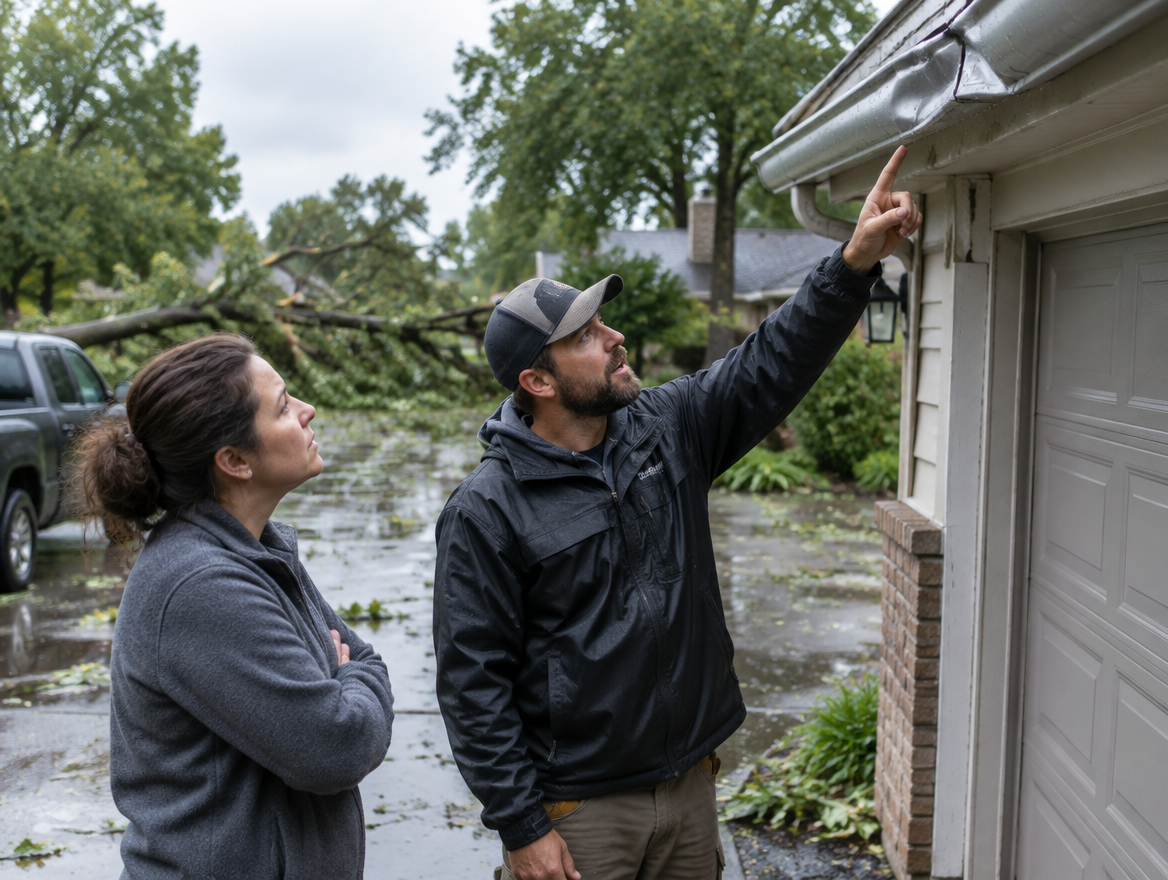
The trap is letting anything sound like a promise. "We'll get your insurance to pay for a new roof" is the kind of line that causes trouble for a roofing company, and your own rules and your state's rules decide what your team can say about a claim. Set it up so the receptionist never comments on coverage at all, and transfers or books a callback for anyone who wants to talk the claim through.
Checklist
Insurance facts to collect & nothing more
- Has the homeowner already filed a claim?
- Do they have a claim number?
- Is an adjuster visit scheduled, and when?
- Do they want to talk the claim through? Then book a callback or transfer
- Never a word about what the policy will or won't cover
What does a missed roofing call cost?
More than most other trades, because a single roofing job is large, and you can estimate it from your own numbers. Here's an illustration with made-up figures, not a result Lani AI has measured. Say your line misses 10 calls a month from new homeowners. If 3 of those would have booked an inspection, and you close 1 in 4 inspections, that's 0.75 jobs a month. At $12,000 per job, that's $9,000 of revenue a month, or about $108,000 a year (10 x 3/10 x 1/4 x $12,000 x 12).
Treat that as revenue, not profit, and assume some of those callers would have tried you again. Cut it in half and it's still worth checking against your own figures, and a single storm month can push the missed calls well past 10. The quickest way to get your real numbers is your phone system's call log: count last month's missed calls and how many came from numbers you didn't know. Then put your figures into the ROI calculator.
The trap is comparing the cost of answering with nothing. The real comparison is against what you'd pay for the same coverage another way: a second office person, or an answering service that takes a message. We compared those options in AI receptionist vs answering service. The live site also says it answers in 30+ languages, which matters if some of your homeowners would rather speak Spanish.
How do you test an AI receptionist for your roofing company before you buy?
Call your own line the way your customers would, before any real customer does. Make 6 calls. Call at night about water coming through a bedroom ceiling during a storm. Call about hail damage and ask for an inspection this week. Call from a town outside your service area. Call as a tenant whose landlord isn't on the line. Ask "will my insurance cover a new roof?" and listen for whether it stays out of it. Then call as an existing customer asking when the crew starts, and see whether it hands you to a person.
Checklist
Your 6 test calls & what should happen
- Night, water through a bedroom ceiling: reaches your on-call person
- Hail damage, inspection this week: booked with the answers attached
- A town outside your area: a clean no
- A tenant whose landlord isn't on the line: asks for the owner
- "Will my insurance cover a new roof?": stays out of it
- Existing customer asking when the crew starts: handed to a person
After each call, check 4 things: did the active leak reach your on-call person with the details attached, did the inspection land on the right calendar with the address and the qualifying answers, did the out-of-area caller get a clean no, and did every caller hear clearly what happens next. If 1 of those fails, fix the rule and call again.
That's what a pilot is for. The 7-day pilot is completely free. If you decide to move forward, there's a setup. Run it through a week of normal calls and, if you can, a rainy day, and you'll know whether an AI receptionist for your roofing company books real inspections. See how the AI receptionist works, or run your numbers in the ROI calculator first.
Frequently asked questions
Can an AI receptionist handle storm calls for a roofing company?
Yes, if you write the sorting rules down before the storm. It answers each call as it comes in, sends active leaks to your on-call crew and books inspections into slots your estimators can actually reach.
Will an AI receptionist quote roofing prices?
It shouldn't. Set it up to say an estimator gives a written price after the inspection, and to transfer callers who insist on talking numbers to a person.
What should it say when a caller asks if insurance will cover the roof?
Nothing about coverage. It can ask whether a claim's been filed, take the claim number and the adjuster date, and book a callback or transfer anyone who wants to talk the claim through.
Does an AI receptionist answer roofing calls at night and on weekends?
The live AI receptionist page says it answers 24/7 in under a second, including nights and weekends, and writes each call and its outcome to your CRM.
How can a roofing company test an AI receptionist before buying?
Run the 7-day pilot, which is completely free, through a week of normal calls and a rainy day if you can, and make 6 test calls of your own. If you decide to move forward, there's a setup.
Ready when you are
See if Lani AI is right for your business.
7-day pilot, completely free. Live by the end of this week.